- Home
- About Us
- Study Programs
- Scientific Research and Projects
- Students
- Study at Qiriazi
- Announcements

The roots of Qiriazi University go back to 1922, when Parashqevi Qiriazi (1887–1971), Sevasti Qiriazi (1871–1949), and Kristo Dako (1876–1941) founded the Kyrias Women’s Institute in Kodër-Kamëz. This institute was established to promote emancipation, education, gender equality, individual rights, and the empowerment of the social and political status and role of Albanian women. It was a continuation and reflection of the Qiriazi family tradition, their life and practical experience in Romania, Turkey, and the USA, as well as the active engagement of the Qiriazi sisters in addressing Albanian national issues. Being one of the first educational institutions in Albania during the 1920s–1930s, the role and contribution of the Kyrias Women’s Institute was also recognized by Pandeli Evangjeli, one of the Albanian prime ministers of the time.
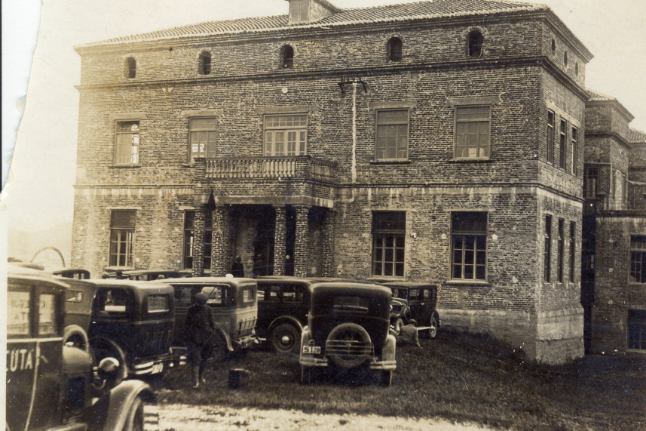
The founders of the Kyrias Women’s Institute, one of the first institutions within the newly established Albanian educational system, suffered their first blow in 1933, when King Zog’s government issued a decision to close it. Under the justification of building a national education system, improving curricula, reorganizing education for Albanian women, and opening new schools, the Ministry of Education’s law drafted in 1928 foresaw undertaking a reform and making changes in school programs, vocational education, and the primary and secondary education system. The decision stipulated the closure of private and religious schools. In April 1933, Parliament declared the education of Albanian citizens as the exclusive right of the state, mandatory and free of charge. Although the law allowed private institutions to operate if they cooperated with the state, the Kyrias Women’s Institute was not given the opportunity to continue its work and was shut down.
Until 1939, despite invitations and temptations from King Zog’s government cabinets to work in the Ministry of Education, the Qiriazi sisters preferred to continue their work as teachers. Even though Kristo Dako passed away in 1941, the building of the Kyrias Institute in Kodër-Kamëz remained open to anyone who wished to contribute to the development of Albanian education. However, with the fascist occupation of Albania by Italy, the Qiriazi sisters—well-known for their patriotic activity in defense of Albania’s national interests and for their opposition to the Italian occupation—faced attacks from Italophile propaganda. In such a situation, the activity of their institute managed to survive only thanks to the support of Albanian nationalists.
The second blow to the Qiriazi sisters and the Kyrias Women’s Institute came with the establishment of the communist regime in 1945. In 1944, the institute was shut down, never to reopen for the next 60 years. Although the Qiriazi sisters had opposed the fascist occupation, the new communist regime did not forget Mr. Dako’s services to King Zog—having even agreed to serve as Minister of Education—nor the affinity of Kristo Dako, Sevasti Qiriazi, and Parashqevi Qiriazi with the American way of viewing governance and justice, nor the sisters’ friendly relations with nationalist circles during the fascist occupation. Sevasti Qiriazi was regarded as an American agent. One of the first actions taken by the communist regime was the confiscation of the institute’s facilities and equipment, later used as offices and classrooms for the Agricultural Institute of Kamza, today the Agricultural University of Tirana. Although the new regime needed trained and experienced cadres in the field of education, Sevasti Qiriazi—the founder of the first girls’ school in 1891 in Korça—was never called even to the simple office of a school clerk in Tirana. The “reward” the communist regime gave them in return for their early patriotic activity, their contribution in the field of education, and their academic and life experience in the United States was neglect, persecution, abuse, and imprisonment—not only of the Qiriazi sisters but also of their children, Aleksandër and Gjergj. The consequence of such treatment was Gjergj Qiriazi’s suicide in his prison cell and the death of Sevasti Qiriazi in 1949. Although years later the regime granted Sevasti Qiriazi the title of “People’s Teacher,” the recognition of their contribution was not the result of the communist regime changing its mind and deciding to make self-criticism or “correct” its criminal treatment of the Qiriazi family. Rather, the awarding of the title came from the undeniable fact that in the very short history of the development of Albanian education, which truly began only in the 1920s, the names of the Qiriazi sisters, the traces they left, and the concrete works they accomplished in education throughout their lives appeared everywhere and could not be erased. The development of Albanian education cannot be understood without them; it is inseparably associated with the name and work of the Qiriazi family.
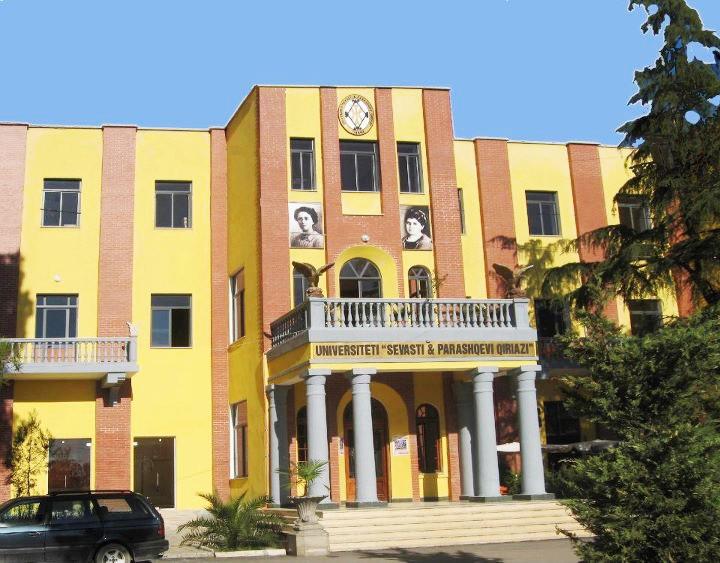
In 2006, about 16 years after Albania’s opening toward a democratic system of governance and society, Robert Dako, the heir of the Qiriazi family, took the initiative and decided to restore once again the reputation and name of the institution founded 80 years earlier by the Qiriazi sisters. He decided to reopen the former Kyrias Women’s Institute in the same building and premises where it had been established and operated in the 1920s, under the name The Non-Public Higher School “Sevasti and Parashqevi Qiriazi.” The school was conceived as a higher education institution that combined teaching with academic activity and scientific research, offering studies in Law and Economics. During its seven years of activity, the NPHS “SPQ” managed to attract a considerable number of students and also adopted principles inspired by the American model of academic and institutional management and functioning. The third blow to Qiriazi College, as a private higher education institution, came in 2013—only seven years after its reopening. Just as during King Zog’s time, the closure was justified and carried out within the framework of reforms undertaken by the then Albanian government in higher education. In its seven years of functioning as a private higher education institution, Qiriazi College had to face practices of institutional and academic evaluation of university institutions influenced by political clientelism; it also had to cope with a growing number of financial difficulties. The culmination of such a situation was the 2013 decision of the Ministry of Education to suspend the institution’s teaching activity. After seven years of work, Qiriazi College was once again forced to close its doors.
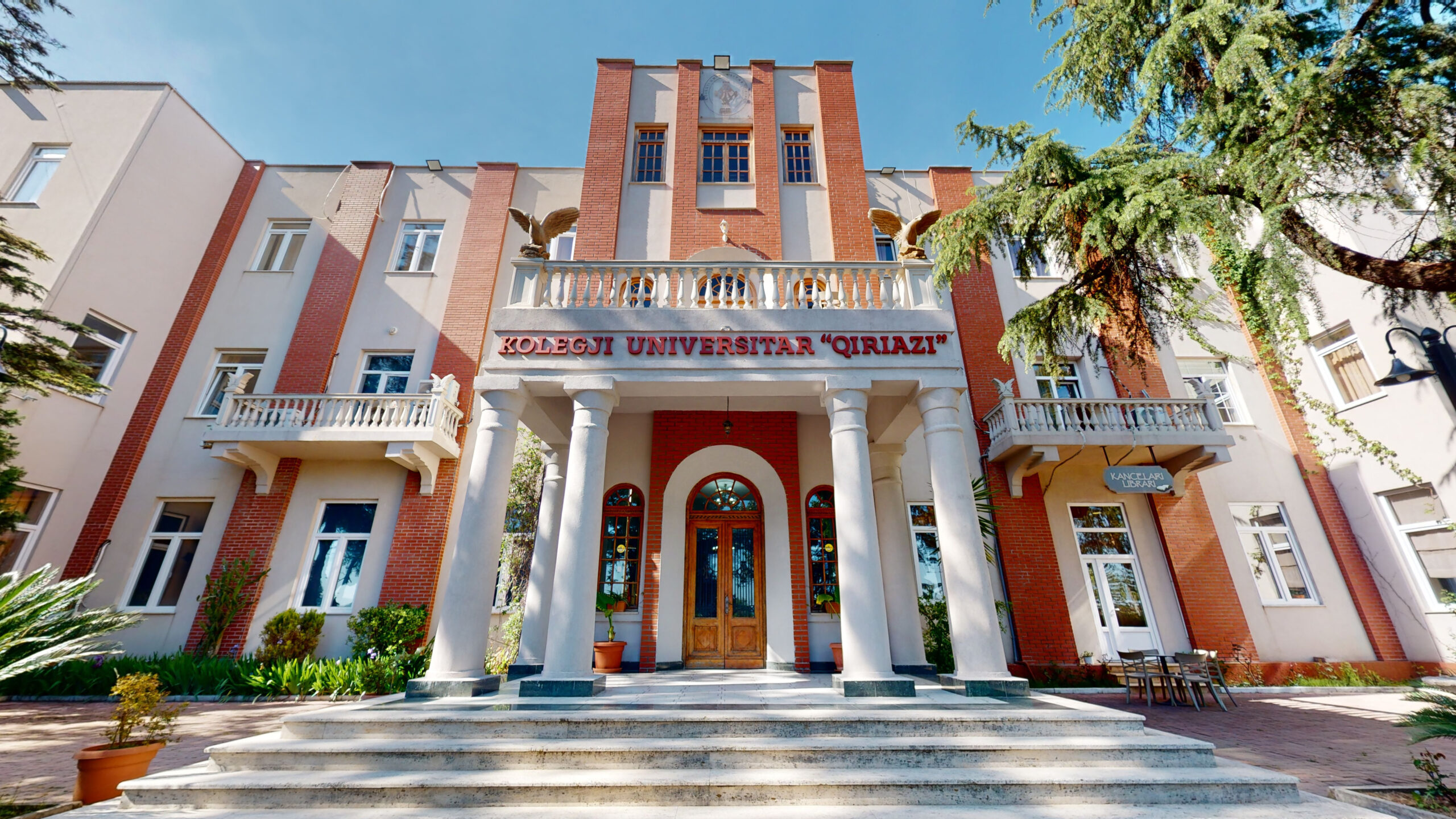
Since 2016, the former Kyrias Women’s Institute and the former NPHS “Sevasti & Parashqevi Qiriazi” reopened their doors as Qiriazi University College. With the initiative and investment of the “Uldedaj” Investment Group, Qiriazi once again opened its doors to university education. In its commitment to reviving the institution, the “Uldedaj” Group was driven not only by the practical experience and close connections of its main investors in the field of education and academic activity but also by the desire to keep alive the name and tradition of the Qiriazi sisters and the institution founded by them. In light of enriching and further consolidating the Qiriazi educational tradition, Qiriazi University today aims to rely on the best models of the functioning of higher education institutions. Its mission remains the provision of quality education at the levels of Professional, Bachelor, and Master studies. The foundation for achieving this mission lies in the combination of teaching with scientific research, placing the student and their future at the center of attention. In the spirit of the Qiriazi family’s best tradition, Qiriazi University operates on the values of integrity, respect, responsibility, academic quality, transparency, and academic freedom. In the same spirit, the strategy of Qiriazi University is to increase academic quality, cooperation with other universities within and outside Albania, and the mobility of its students and staff. As an institution of higher education accredited by ASCAL, Qiriazi University aims to offer education and diplomas not only in the fields of law and economics but also in other disciplines. The development and expansion of its academic fields of activity will not only enrich the Qiriazi family legacy but also transform this tradition into a permanent source of quality in education and scientific research in Albania.