
- Home
- About Us
- Study Programs
- Scientific Research and Projects
- Students
- Study at Qiriazi
- Announcements

The Qiriazi family is a distinguished Albanian family from Manastir (today in the Republic of North Macedonia). They were educators, publishers, and public figures of the Albanian National Awakening period. They are remembered for their activities in support of strengthening Albanian national consciousness.
The prominent Albanian Qiriazi family from Manastir is well known for its great contribution to the development of Albanian culture and education from the late 19th century to the early 20th century. The Qiriazi family originated from the village of Magarovë, from where they first moved to another village, Tërnovë, near Manastir, and later settled in the city itself, which at that time was the center of the Manastir Vilayet.
The father, Dhimitër Qiriazi, a member of the city’s Albanian colony, and the mother, Maria, had ten children: seven sons and three daughters: Tashko, Konstandin, Gjerasim, Gjergj, Naum, Kristo, Pandeli, Fankë, Sevasti, and Parashqevi. This family (Dhimitër and Maria), although living in a city with a mixed population in terms of nationality, managed to preserve Albanian traditions and raise all their children in the spirit of love for their mother tongue.
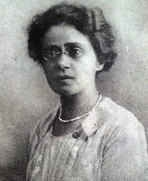
Parashqevi Qiriazi (1880–1970) studied at Robert College in Istanbul and later returned to Albania to teach. In 1909, she published an Albanian primer for elementary schools. Later, she organized children’s education and night schools in southern Albania, and also helped establish the foundations of a library system. In the United States, she helped found the society “Yll’ i Mëngjezit” (Morning Star) and published the illustrated periodical of the same name, which was issued in Boston from 1917 to 1920. Parashqevi Qiriazi also participated in the Paris Peace Conference in 1919 as a representative of the Albanian–American community. The Qiriazi family name has been widely respected throughout all Albanian territories, and many institutions bear their name. March 7 has been officially declared Teachers’ Day in Albania, in memory of the opening of the school by the Qiriazi family in 1891.
...

Sevasti Qiriazi–Dako (1871–1949) Sevasti Qiriazi–Dako studied at Robert College in Istanbul with the support of Naim Frashëri and was the first Albanian woman to study at this American institution, from which she graduated in June 1891. After returning to Albania, she was among the founders of the girls’ school in Korça. After the First World War, this school was still known by the family name, as the Qiriazi School. Sevasti Qiriazi–Dako published an elementary grammar book for primary schools (Manastir, 1912) and edited a series of history texts. Together with her husband, the journalist and writer Kristo Dako, and her sister Parashqevi, she emigrated first to Romania and later to the United States, where she collaborated on the periodical “Yll’ i Mëngjezit” (Morning Star), which was published twice a month.
...
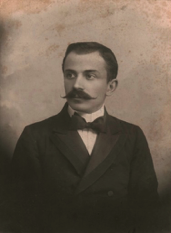
Kristo Dako was born in Korça on December 24, 1876, the son of Anastas Dako. In 1887 he emigrated to Bucharest, Romania, where he completed high school in 1898 and graduated from the Faculty of Mathematics in 1902. He became active in the societies “Shpresa” (Hope) and “Dituria” (Knowledge) in Bucharest. Later, he went to the United States, where he completed his studies at the Faculty of Philosophy at Oberlin University (1906–1913). In 1908 he returned to Albania, and in 1909 he took part in the Congress of Elbasan. In 1913 he was elected president and editor of the newspaper Dielli, the organ of the “Vatra” Federation. He participated in the Paris Peace Conference (1919) and met twice with U.S. President Woodrow Wilson to explain Albania’s national interests. In 1921–1922 he served as a deputy of the Progressive Party and later became part of the “Holy Union.” In December 1921 he was appointed Minister of Education in Hasan Prishtina’s government. After withdrawing from politics, he dedicated himself to education and, on October 2, 1922, opened the Kyrias Institute, while on April 11, 1925, the cornerstone was laid for its new building in Kamëz.
...
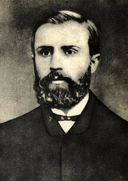
Gjerasim Qiriazi (Manastir, October 18, 1858 – January 2, 1894) was a preacher, translator, educator, writer, and national awakener, as well as the founder of the “Brotherhood of Evangelicals.” In 1878, he began his studies at the American Theological College in Samokov, Bulgaria, which he completed in 1882 with excellent results. He became a practicing pastor in Bulgaria and was later appointed as an evangelist for Albanians. In 1883, he started working in Korça, where he began writing the first hymns in the Albanian language. In 1887, he taught at the first Albanian school in Korça. In 1888, he translated and published the Gospel of Matthew and later, encouraged by Naim Frashëri, began preparing the first five books of the Bible as school texts. In March 1891, together with his sister Sevasti, he prepared the plan for the opening of the Girls’ School in Korça. Because of his patriotic activity, in 1892 he was excommunicated by the Eastern Orthodox Church. On November 14, 1892, he founded the Evangelical Church of Korça and the Evangelical Brotherhood society. He published the newspaper “Letter of the Brotherhood” and many poems, which, after his death, were published in 1903 in Sofia under the title Kristomaci. Gjerasim Qiriazi died on January 2, 1894, at the age of 35.
...
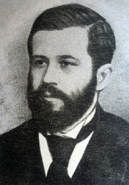
Gjergj Qiriazi took over the leadership of the Girls’ School in Korça after the death of his brother Gjerasim (1894). In 1908, he was a delegate at the Congress of Manastir, and in 1909 he was among the founders of the Albanian newspaper Bashkim’ i Kombit (Union of the Nation). He published the poetry collection Kënkë të Shenjtëruara (Sacred Songs, Sofia, 1906), as well as collections of educational fragments written by his brother Gjerasim.
...

